Wednesday, March 11, 2026

High Pressure & High Temperature SS316L EC H-Cell


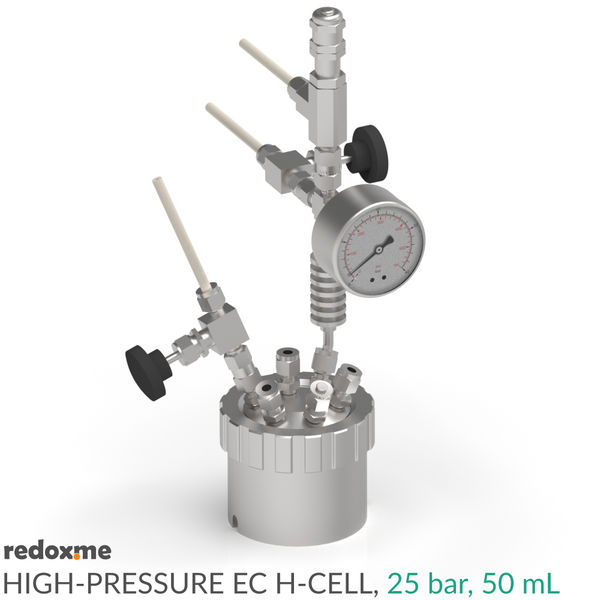
High-Pressure EC H-Cell, 25 bar, 50 mL - High-Pressure Electrochemical H-Cell

High-Pressure EC H-Cell, 25 bar, 50 mL - High-Pressure Electrochemical H-Cell

The High-Pressure Electrochemical H-Cell SS316L is a sophisticated apparatus engineered to facilitate advanced research in electrochemistry under elevated pressure and temperature conditions. In this cell separating the working electrode from the counter electrode with an ion-exchange membrane 

Test Stations & Electrochemical Flow Systems


The Batch Electrochemical Water Treatment Test Station is a versatile laboratory platform designed for the investigation and development of a wide range of electrochemical water treatment processes. Operating in batch mode, this test station allows precise control over experimental conditions, including current, voltage, temperature, and mixing, making it ideal for both research and process optimization.
Its modular design supports multiple electrochemical treatment methods, including:
a) Electrochemical coagulation for the removal of suspended solids, metals, and phosphates.
b) Electrochemical oxidation for the degradation of organic contaminants and advanced oxidation processes (AOPs).
c) Electrochemical reduction for the treatment of specific pollutants, such as nitrate or hexavalent chromium.
d) Electroflotation to assist in the separation of flocs and colloids.
e) Electrochemical disinfection through in-situ generation of reactive species.

This test station is suitable for fundamental studies, method development, and pilot-scale experiments, providing researchers and engineers with a flexible and reliable tool to explore, optimize, and scale electrochemical water treatment technologies. Its batch operation ensures easy sampling, monitoring, and adjustment of reaction parameters, enabling thorough analysis of reaction mechanisms and process efficiency.

This Batch Electrochemical Water Treatment Test Station comes, in its standard configuration, equipped with turbidity, pH, temperature, and conductivity sensors, providing real-time monitoring of key water quality parameters. Additional sensors can also be installed upon request, allowing full customization to meet specific experimental needs. This includes chemical sensors (oxidation-reduction potential, dissolved oxygen, free chlorine/chlorine dioxide, hydrogen peroxide, ammonia/nitrite/nitrate, total organic carbon, and metal ion sensors), physical sensors (pressure, flow, optical/UV absorbance, particle size), and reference electrodes.  
Programmable DC Power Supply is powered by a single-phase voltage, offering an output voltage of 0-60 V, current of 0-120 A, providing up to 3 kW of power. It seems obvious that the power offered by this power supply far exceeds the practical requirements of a 1 L batch reactor. However, its use is justified by the possibility of system expansion and performing reactions on larger electrode surfaces or in a flow cell with a stack configuration. Thanks to the use of proprietary software developed by redox.me, it is possible to measure parameters in real-time using a computer. Other system components, such as the cell, electrode holders, and additional elements, can also be customized upon request.

Application note
The Batch Electrochemical Water Treatment Test Station is ideal for:
a) Laboratory research and fundamental studies of electrochemical processes.
b) Development and optimization of new water treatment methods.
c) Pilot-scale testing before scale-up to continuous-flow systems.
d) Investigation of reaction kinetics, efficiency, and mechanisms in controlled batch conditions.

Main benefits include: high experimental flexibility and customization, real-time monitoring of multiple water quality parameters, support for a broad range of electrochemical water treatment processes, detailed analysis of process performance, efficiency, and scalability.

Kulim Hi Tech Sdn Bhd has become an authorized agent of redox.me

 Electrochemical Cells


On the 19 Dec 2025 Kulim Hi Tech Sdn Bhd has become an authorized agent of redox.me 

They engage in diverse projects funded by public and private sectors, spanning national and international levels. We actively seek opportunities to collaborate within consortia and submit project proposals where our involvement promises substantial advantages. 

Our typical role in EU funding programs involves managing the integration of electrochemical systems across all facets within designated work packages. 

Driven by the conviction that true advancements stem from interdisciplinary collaboration, we prioritize societal impact over profit. 

Our commitment lies in effecting meaningful change for the betterment of our community and beyond.

Tuesday, November 11, 2025

Kulim Kht Bubble Test System ACM Gill AC


ACM have set the standards for Inhibitor testing, our reliable, good looking, accurate equipment is to be found in Inhibitor laboratories the world over, from a University with a single Gill AC to a giant specialist chemical company with banks of Gill 6,8,12s or Gill ACs working in parallel. Plus, last but not least, the Bubble Test will operate multiple instruments in parallel for simultaneous testing of as many samples as you require. 

Kulim Hi-Tech from Malaysia will provide all customers with complete package of Bubble Test system and software plus all related accessories.

Bubble Test is also known as Kettle Test and Inhibitor Screening. 

Monday, September 22, 2025

Kulim Kht Gill AC 2 Channel Bubble Test Technique for Oil Refinery Lab Offshore


 Bubble Test is primarily used for testing of oil field inhibitors using the Bubble Test technique. Other names for this test include the Kettle Test and Inhibitor Screening. They are all tests that use the LPR technique with respect to time to calculate the efficiency of oil field inhibitors.

A series of LPR tests are collected over time, giving Corrosion Rate results. Cells (or Channels) are assigned together into Groups, each group has an Add Inhibitor button, once pressed, corrosion rates can be calculated for 3 periods - prior to Add Inhibitor, after 2 hours and after 16 hours (configurable), this enables Percentage Protection to be calculated

The standard Bubble Test uses a series of Linear Polarization Tests over a period of about 24 hours to assess the performance of a corrosion inhibitor. In simple terms it does not give an indication of localized corrosion. However, up to 80% of pipeline failures are ascribed to pitting, but very few monitoring methods are capable to show this outcome.  LCM™ attempts to give the user this information as well as the standard Bubble Test information. The test preparation and duration is the same as for a standard three electrode Bubble Test using an Auxiliary, Corrosion Resistant Reference and Test Electrode. The standard Bubble Test data is achieved with or without the addition of LCM™LCM™ just gives additional information relating to the magnitude and frequency of pitting events.

Thursday, July 4, 2024

Kulim Kht BioNavis QCMD - advance surface and interface analysis


 We are excited to announce the launch of the BioNavis QCMD instrument range!

The Quartz Crystal Microbalance with Dissipation (QCMD) instruments complement our existing MP-SPR instruments, completing our suite of real-time and label-free analytical tools.
BioNavis QCMD is designed to advance surface and interface analysis with high precision measurement of key parameters, including viscoelasticity and bound mass. Key benefits include:
✳ High Sensitivity and Accuracy:
Detect even the smallest changes with high-frequency sensors, ensuring you get the most reliable data for your research.
Ideal for a wide range of applications, including biomolecular interactions, material science, and sensor development.
✳ User-Friendly Interface:
Easy-to-use QuickLock cells, sensors, and intuitive software, making complex analyses simpler and faster.
Stay tuned upcoming webinars to learn how our innovative solutions can benefit your research. For more information,

Monday, August 21, 2023

Kulim Kht Inhibitors Studies Bubble Tests- Gill 6,8,12 ACM Instruments


Typical results are shown as metal has the highest corrosion rate but on the addition of the inhibitor the rate drops to the lowest. The test should be repeated at least three times and the results compared for scatter. The percentage protection of an inhibitor is usually quoted this is defined as 100*(uninhibited rate-inhibited rate)/uninhibited rate. The bubble test software will display this for all channels under test. The temperature of the test is important as a whole set of percentage protection values is displayed with respect to temperature.

Bubble Test facilitates running tests in multiples; tests are set up using a simple Bubble Wizard, a series of LPR tests are collected over time giving Corrosion Rate results. Results can be printed at the end in many ways including tables, lines and bar graphs. Cells (or Channels) are assigned together into Groups, each group has an Add Inhibitor button, once pressed, end corrosion rates can be calculated at the end of the test over 3 periods – prior to Add Inhibitor, after 2 hours and after 16 hours, this enables Percentage Protection to be calculated.

Bubble Test - LPR - Inhibitors Gill 6,8,12 ACM Instruments Kulim Kht


Testing of these chemicals is performed by makers and users. Makers set up initial screening to not reject any potential good ones. Users set up initial screening to reject any potential bad ones. Test metal should be the same metal as that to be protected as should be the test fluid. The two most widely used tests are LPR and Tafel plots. Both are ideally performed using a Gill 8 or Gill 12. The use of a multiple channel instrument allows for replication to gain confidence in the results. The Bubble Test software automatically groups the tests and prints inhibition reports using the LPR method. After all the small LPR perturbations have been made an optional Tafel sweep is performed to obtain the Tafel slopes. AC impedance is less commonly used except with high resistance electrolytes where the IR drop in the solution needs to be measured and overcome. 

Monday, June 12, 2023

Potentiostat KHT ACM MultiPot 16.


The Pot 16 has 16 potentiostats built in, each at a fixed range i.e. not changed through the software. This allows very long tests of electrodes under potentiostatic control to be performed in complete certainty that the set potential will not be changed. Current and potential are recorded with time. Ideal for the study of cathodic disbondment. For more information click here.

Thursday, January 12, 2023

Surface Plasmon Resonance (SPR) Kulim Kht Bionavis Kinetics Titration


Introduction

Surface Plasmon Resonance (SPR) is a popular real-time label-free method to assess biomolecular interactions especially in the fields of drug discovery and biosensor development. Multi-Parametric Surface Plasmon Resonance (MP-SPR) scans a broad angular range and records whole SPR curve. Hence from the same measurement, MP-SPR provides more information about changes at the surface than traditional SPR. Additionally, MP-SPR records also bulk (solvent) effect simultaneously with the binding signal in every channel. Thanks to the PureKinetics™ feature, bulk effect can be separated from molecular binding events in real-time, providing more reliable results and enabling measurements, which are not possible using traditional SPR instruments. PureKinetics™ enables measurement of kinetics in altering dissociation buffers (Application Note #147) To quantify affinity and kinetic parameters of the biomolecular interaction, binding at not less than two concentrations of the analyte needs to be measured. Concentrations need to be in the range close to the dissociation constant (KD), and usually a few more concentrations are required, as affinity is typically unknown. Conventionally, the dissociation rate is measured after each analyte concentration. Additionally, if dissociation is slow, the remaining part of the bound analyte is removed using a run of regeneration solution between the sample injections. Ideal regeneration breaks the bonds between the ligand and the analyte without deactivating the molecules on the surface. However, such regeneration is sometimes difficult to achieve and also the ligand is damaged. The KineticTitration option allows the injection of samples sequentially and the dissociation is measured only at the end of the whole run. This shortens the time required for the whole measurement cycle (Figure 1). KineticTitration is especially useful when: • results are needed quickly • there is less time available for assay optimization (such as for finding a suitable regeneration solution) • surface is difficult or impossible to regenerate without losing the activity of the ligan
 

Thursday, January 5, 2023

Kulim-KHT ACM Gill Weld Tester


 ZRAs a weld tester is the ideal instrument when testing segmented or mixed metal systems. A full range of AC and DC techniques are included for simultaneous testing of all 1to16  ZRA. Each ZRA has the same frequency response, count resistor ranges and power as a standard Gill AC ZRA.

Wednesday, December 21, 2022

Kulim Kht LPR Step for long Term Test ACM


This is a user friendly product and easy to use compare 
to others instruments. The software is complete package
 and easy to collect data

Merry Christmas and Happy New Year 2023


                                                     * Picture was painted originally with mouth by Konrad Gerber* 

Tuesday, December 20, 2022

Kulim Kht Weld Tester ACM Gill.


Welds pose a particular problem. Each weld is a complex galvanic couple made up of parent metal (e.g. a pipeline) a weld metal and an area of heat affected metal. Under many circumstances the bulk of the anodic dissolution is within the heat affected zone (haz). This very thin anode and large cathode of parent metal is the worst possible case rapidly leading to failure. Conventional electrochemical testing in which a sample of the weld is immersed and used as the working electrode will only reveal a low overall net rate not the high rate in the heat affected zone. The solution is to segment the sample weld cutting out test electrodes of parent1 haz1 weld haz2 and parent2. These can then be coupled together and the individual response from each section measured. The instrument to do this is called a Weld Tester. This instrument is a Gill 8 or 12 built to accommodate the extra four working electrodes per cell. Once the cell is connected the full range of DC and AC tests are used to determine the susceptibility of each component to corrosion.

Monday, November 28, 2022

Kulim Kht smartphone-based contact angle measurement instrument

 Conducting experiments to measure both static and dynamic

 (advancing and receding) contact angles

In this study, a smartphone-based contact angle measurement instrument was developed. Compared with the traditional measurement instruments, this instrument has the advantage of simplicity, compact size, and portability. An automatic contact point detection algorithm was developed to allow the instrument to correctly detect the drop contact points. Two different contact angle calculation methods, Young-Laplace and polynomial fitting methods, were implemented in this instrument. The performance of this instrument was tested first with ideal synthetic drop profiles. It was shown that the accuracy of the new system with ideal synthetic drop profiles can reach 0.01% with both Young-Laplace and polynomial fitting methods. Conducting experiments to measure both static and dynamic (advancing and receding) contact angles with the developed instrument, we found that the smartphone-based instrument can provide accurate and practical measurement results as the traditional commercial instruments. The successful demonstration of use of a smartphone (mobile phone) to conduct contact angle measurement is a significant advancement in the field as it breaks the dominate mold of use of a computer and a bench bound setup for such systems since their appearance in 1980s


Wednesday, November 9, 2022

Electrochemical Cell Set Kulim Kht ACM Bubble Test Set up


Electrochemical Cell Kit

The 1 Litre Quickfit type Electrochemical Cell is supplied with the following: Sealed 1 Litre Reaction Vessel; Platinum Band Type Auxiliary Electrode; Saturated Calomel Reference Electrode; Reservoir; Luggin Probe with Tubing; Platinum Mains Noise Reduction Electrode; Retort Stand; 0-105°C Thermometer; Glass Frit; Exhaust and a two Electrode Probe. The retractable probe fits in the centre of the cell and accommodates two standard 4.75cm2 screw on electrodes for galvanic C&V noise or 2 electrode LPR studies. The access hole in the centre of the cell which is normally used for the 2 electrode probe is supplied with an adapter for fitting of other probe types to suit your requirements. The adapter supplied with the Luggin probe can be removed in order to directly place the reference electrode into the cell.

Potentiostat Kulim Kht ACM Pot 16 ISO


DESCRIPTION 

 Isolated Pot 16 has the same specifications as the Pot 16, but each channel is isolated allowing samples to be in the same electrolyte. Fixed potentials for parallel potentiostatic tests. This instrument provides 16 potentiostats for long term testing of electrodes at a fixed potential.

 Each channel has a fixed current measurement range, selected on purchase for the type of testing to be performed. The standard range is 350 mA with a resolution of 5 micro Amps. Output potential can either be fixed, selected by a two, three or four position switch, or variable via a 10-turn dialled knob. Extra optional potential selectors may be added and channels grouped. 

Typical configurations would be all channels set by a two position switch selecting 1.5V or 3V, or channels 1-8 set from -5V to +5V via a 10 turn dialled knob and channels 9-16 set by their own dialled knob. Most standard cathodic disbondment tests (e.g. ISO15711, or ASTM G8, G42, G80, G95 or CSA Z-245) require 1.05V, 1.5V, 3V or 3.5V; however a galvanostat option can be added for the 3mA Australian and New Zealand standards (AS-3862, AS/NZS4352). 

 Measurement of the current flowing from each potentiostat and the voltage between RE and WE (as a check on operation) is performed by a pair of 24 bit converters, running at a maximum read rate of 4 channels per second. 

 The software supplied allows for simple set up of data filename and read rate and displays the latest data recorded. The data is stored on the PCs hard disc as the test progresses. In the event of a power cut the data will be added to the earlier data on resumption of the power supply. An example of the use of a Pot 16 is in performing tests on coated steel to study the likelihood of cathodic disbondment at a fixed potential. A dedicated and powerful instrument offering very cost effective fixed potentiostats for long term measurement. 

Kulim Kht ACM Weld Tester ZRA


 Weld Tester   

With five independent ZRAs a weld tester is the ideal instrument when testing segmented or mixed metal systems. A full range of AC and DC techniques are included for simultaneous testing of all 5 ZRAs. Each ZRA has the same frequency response, count resistor ranges and power as a standard Gill AC ZRA.


Software Overview 

At the heart of an ACM system is a Sequencer and Core Running application, now into Version 5 the emphasis is on reliability. Working in unison, Sequencer setups up a sequence of techniques and Core Running collects data from a sequence of techniques. The Sequencer was designed to be easy to use, with an intuitive interface, one that is common across the range from Data Collection to Analysis; learning effort is kept to a minimum.